
Khasra Number Explained: Definition, Importance & How to Find It
Understand Khasra numbers, their role in land records and how to check them online. Learn the differences between Khasra, Khata and plot numbers, plus why accurate property details matter for home loans.
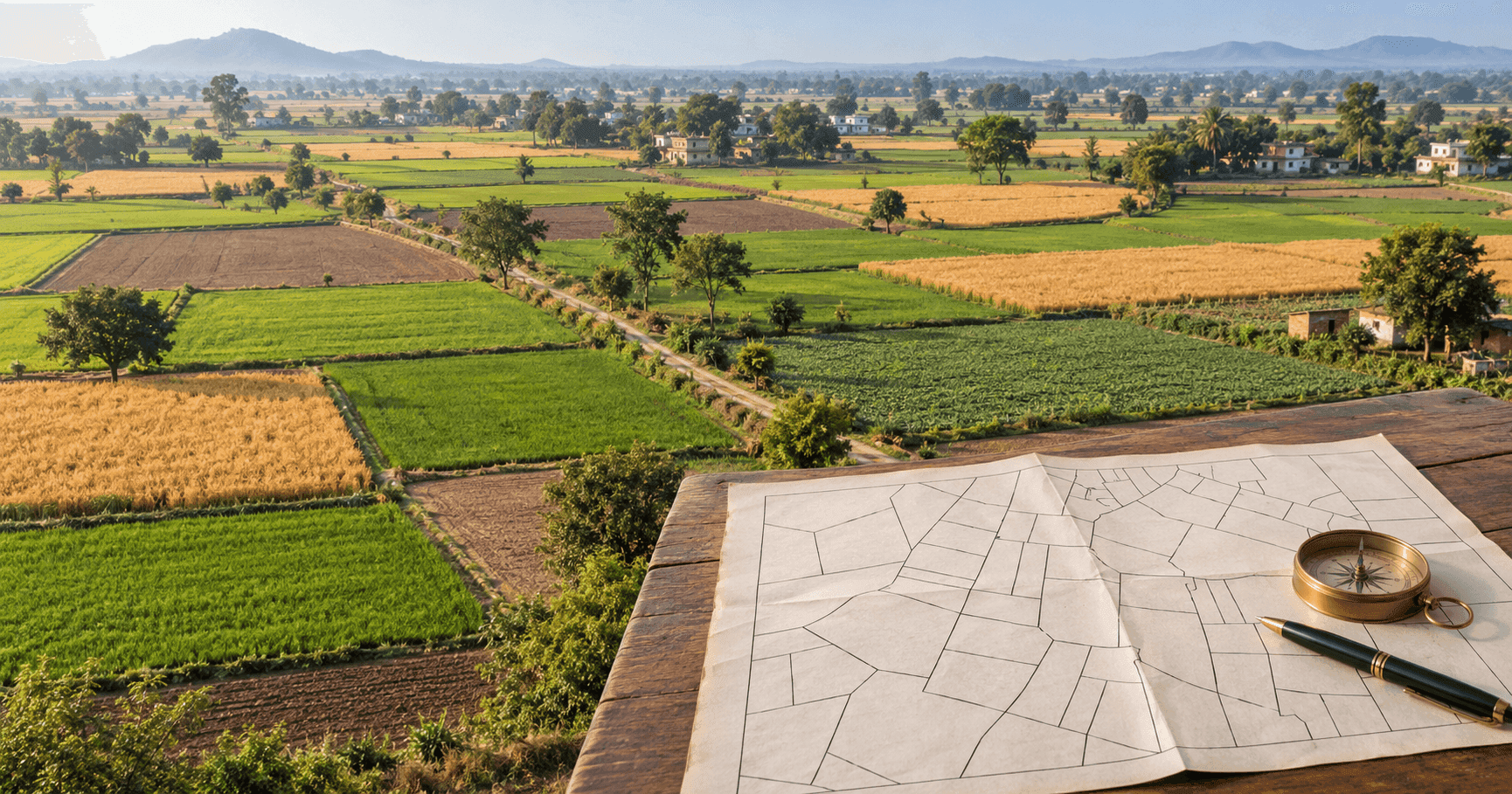
A Khasra number is a specific plot or parcel identification number assigned to land, usually agricultural or rural, in official revenue records. Maintained by state revenue departments, it functions as an address for land parcels within a specific village or revenue area.
Understanding your Khasra number helps when searching land records, verifying property boundaries, or completing property transactions. This guide explains what a Khasra number is, why it matters, how it differs from other land identifiers, and how to find or verify it using state portals.
What Is a Khasra Number?
A Khasra number is an identification number given to a specific piece of land (a parcel or survey plot) within a revenue village (Mauza).
Because land management is governed at the state level in India, the terminology used for land parcels varies by region:
Northern & Central India (e.g., Uttar Pradesh, Madhya Pradesh, Rajasthan, Punjab, Haryana, Delhi): Khasra Number
Maharashtra: Gat Number or Survey Number
Gujarat, Karnataka, Tamil Nadu: Survey Number
Eastern India (e.g., West Bengal, Assam): Dag Number
Bihar: Khesra (a local variant of Khasra)
Key rule on uniqueness: A Khasra number is not unique across India, nor is it unique across an entire state. It is unique only within its specific revenue village. For example, Khasra No. 102 can exist in thousands of different villages.
Why Is a Khasra Number Important?
Locating official land records: It is a key search field on government portals to view land details, check recorded revenue entries, or download copies of records (Nakal / Khatauni).
Boundary identification: Combined with the village cadastral map (Bhu Naksha), it helps pinpoint physical plot boundaries during legal or family partitions.
Property due diligence: Lenders and buyers use the Khasra number to verify that the rural or agricultural land being sold or mortgaged matches government land entries.
Critical Legal Distinction: Khasra Records vs. Ownership Title
A Khasra entry is a revenue record, not conclusive legal proof of title. Its primary purpose under state land revenue laws is fiscal (tax collection, land classification, and crop tracking). Legal ownership must be verified through a registered Sale Deed, mutation records (called Namantaran, Dakhil-Kharij or similar, depending on the state), and records from the Sub-Registrar's Office (SRO).
What Information Is Associated With a Khasra Number?
When you look up a Khasra entry in official land records (such as the Khasra Register or Khatauni), it typically links to details including:
Parcel area & boundaries: The total area (measured in hectares, acres, bighas, or biswas) and dimensions.
Recorded landholders: Names of the registered owners, co-sharers, or occupancy rights holders.
Land classification: Whether the land is irrigated or rain-fed (terms such as Chahi and Barani are used in Punjab and Haryana), agricultural, barren, or commercial/non-agricultural.
Map reference: Cross-reference to the official cadastral map (Bhu Naksha) showing exact spatial boundaries.
Sub-divisions (partitions): If a plot is divided among family members or sold in parts, fractional numbers are assigned (e.g., Khasra No. 142/1, 142/2, or 142 min).
Khasra vs. Khata vs. Khewat Numbers
Land revenue documents display multiple identifiers. While they are often grouped together on portals, they serve distinct accounting purposes depending on the state:
Identifier | Level of Identification | What It Represents |
Khasra Number | Plot / Parcel Level | Identifies a specific physical plot of land. |
Khata Number | Account Level | Refers to a landholder's overall revenue account number. |
Khatauni | Record Level | The register or record that lists who holds or cultivates specific plots under a Khata account. |
Khewat Number | Ownership Level (mainly NW India) | Used in states like Punjab and Haryana to represent joint ownership holdings covering one or more Khasra plots. |
Khasra Number vs. Plot Number
A Khasra number and a Plot number are not the same thing:
Khasra Number: Typically refers to rural or agricultural land managed by the state Revenue Department.
Plot Number: Refers to a specific unit within a planned residential, commercial, or industrial layout managed by a Local Municipal Body or Development Authority (e.g., DDA, HSVP, formerly HUDA, Noida Authority).
When agricultural land undergoes a change of land use (called NA conversion or CLU, depending on the state) for residential development, the original Khasra plot is sub-divided into smaller layout plots. As a result, an urban property may carry both a Plot Number (for municipal layout purposes) and a Khasra/Survey Reference (in its historical revenue background).
How to Find or Check a Khasra Number
Finding a Khasra number: Searching to locate an unknown number using the landholder's name, village name, or plot location.
Checking a Khasra record: Entering a known Khasra number into an official portal to verify the plot's area, recorded owner, and land-use details.
1. Online Land Record Portals (State-Wise List)
Most states offer digital access to land records. Select your state's official portal below to view records:
State | Portal Name | Identifier Term | Official Portal Link |
Uttar Pradesh | UP Bhulekh | Khasra / Khatauni | |
Madhya Pradesh | MP Bhulekh | Khasra | |
Rajasthan | Apna Khata | Khasra / Account | |
Bihar | Bihar Bhumi | Khesra / Khata | |
Delhi | Delhi Land Records (DLRC) | Khasra | |
Punjab | Jamabandi Punjab | Khasra / Killa No. | |
Haryana | Jamabandi Haryana | Khasra / Khewat | |
Maharashtra | Mahabhumi (7/12) | Gat / Survey No. | |
Karnataka | Bhoomi | Survey Number / RTC |
Note: Online portal downloads are generally for information purposes only. Legally certified copies typically need to be obtained directly from the local Tehsil or Revenue Office.
2. Check Property Documents or Cadastral Maps
Sale deeds: Registered title deeds or partition deeds usually cite the Khasra or Survey number in the Schedule of Property section alongside plot dimensions and neighboring boundaries.
Cadastral maps (Bhu Naksha): State GIS portals (e.g., UP BhuNaksha, MP BhuNaksha) display interactive digital village maps. Selecting a plot graphically reveals its Khasra number.
3. Visit the Local Revenue Office
If records are un-digitized or disputed, visit the local Tehsil office or consult the village Patwari / Lekhpal. Provide the village name, owner's name, and historical property papers to locate the physical record in the village revenue registers.
How Verifying Land Records Helps With Home Loans
Checking a property's land records is a useful step before financing a purchase. Lenders typically review title and registration documents, and depending on the lender, property type and state, they may also ask for details such as the survey or Khasra number. Keeping these details accurate and consistent across your documents can make the loan process smoother.
For borrowers comparing financing options, BASIC Home Loan provides a platform that compares home-loan offers from partner lenders and can help users understand options based on their income, property and financial profile.
The platform also allows applicants to provide property details as part of its eligibility process, so accurate information about the property can make it easier to begin the loan assessment. Final eligibility and approval remain subject to the selected lender's criteria.
Conclusion
A Khasra number is a key plot-level identifier in India's land revenue system, enabling property owners, buyers, and authorities to locate individual land parcels in official village records. Whether you are cross-checking plot dimensions on a digital map or preparing for a rural property transaction, knowing your Khasra number makes it easier to access government records.
If you are preparing to finance a property after verifying its records, BASIC Home Loan can help you compare suitable home-loan options from partner lenders.
Because land administration varies by state, always use your state's official revenue portal or visit the local Tehsil office to access official records. Remember that while a Khasra entry confirms how a parcel is indexed in revenue registers, complete legal ownership must always be verified through registered title and registration documents.